


How Sports Betting Is Shaping the Gambling Market
Sports Betting Impact now reaches far beyond the sportsbook itself. In the Philippines, regulated sports wagering sits inside a wider electronic gaming market shaped by mobile access, payment controls, casino crossover and tighter oversight. The goal here is simple: Examine where those changes are taking the gambling market.
Sports Betting Impact on the Wider Gambling Market
Sports betting follows a rhythm that casino games do not. A basketball tip-off, a boxing main event or a Sunday football fixture creates a defined window of attention. The action builds before the event, accelerates while it is live and drops sharply once the result is settled. That event-driven behavior gives sports wagering a different economic role from slots, baccarat or other games available around the clock.
At the same time, sports betting no longer sits neatly in its own corner. PAGCOR regulates sports betting alongside eCasino, eBingo, online poker, numeric games and other electronic gaming products through its electronic gaming framework.
That matters because the broader digital market has become substantial. Philippine electronic and online gaming generated PHP 201.12 billion in gross gaming revenue during 2025, representing 50.77% of total industry GGR. The figure covers several electronic gaming categories rather than sports betting alone, so it should not be presented as sportsbook revenue. Still, it shows how much gambling activity has shifted toward digital channels.
Event-Driven Demand Creates a Different Pattern
Consider a player following a major basketball game. Before tip-off, attention may center on the match winner or point spread. Once the game starts, interest can move toward totals, quarters or other live markets. Twenty minutes after the final buzzer, that same urgency is gone.
That creates three distinct periods:
- Pre-match activity driven by anticipation and analysis.
- In-play activity driven by changing scores and live information.
- Post-event activity when wagers are settled and attention shifts elsewhere.
Casinos do not depend on this cycle. A slot session at 2 p.m. is fundamentally the same product at 11 p.m. Sports betting therefore brings scheduled peaks into a gambling market that otherwise operates continuously.
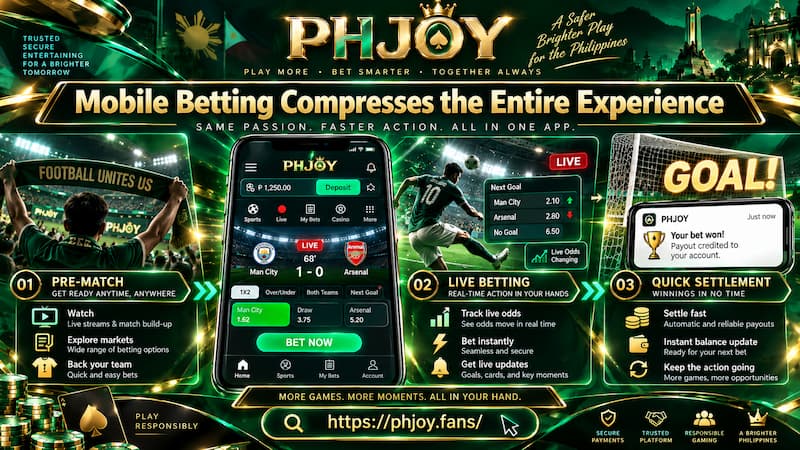
Mobile Betting Compresses the Entire Experience
Sports Betting Impact becomes especially visible on mobile because watching a game and reacting to it can happen within minutes.
Mobile Betting Compresses the Entire Experience
A bettor may check the score during a commute, look at updated odds at halftime and return later to see whether the bet has settled. That makes speed unusually important. Slow account access or delayed information is irritating in casino play; during a live sporting event, it can make a market irrelevant before the screen even refreshes.
Live Betting Raises the Value of Real-Time Data
Pre-match betting gives users time to compare information. Live betting removes much of that breathing room.
Odds can move after a goal, foul, timeout, red card or momentum swing. Operators must therefore coordinate several moving parts at once:
- Real-time event data
- Rapid odds adjustment
- Temporary market suspension when key actions occur
- Accurate results and settlement
- Clear account records after settlement
The sportsbook experience is increasingly a technology problem as much as a betting product.
More Sports Create More Betting Windows
Approved sports markets are also broadening the calendar. PAGCOR’s March 2026 approved-game records include markets covering soccer, tennis, volleyball, Muay Thai, rugby, swimming, table tennis, water polo and numerous other events.
A sportsbook therefore does not need to live or die by one basketball season. Different competitions can fill different hours, months and audience interests. That variety creates more frequent reasons to open an account, although actual availability still depends on what each licensed operator is approved to offer.
Sports Betting Changes Online Casino Competition
The interesting effect on casino brands is not simply that sportsbooks compete for the same money. They increasingly compete for the same screen, account and attention.
A sports fan may open a gambling account because of one championship match, while a casino-focused user may arrive for slots or live tables. Once both activities exist within the same digital environment, expectations begin to overlap.
Someone accustomed to checking odds in seconds will probably expect equally quick navigation elsewhere. A clean transaction history matters whether the last activity was a sportsbook wager or a casino game. Mobile stability, login phjoy speed and straightforward account controls become shared competitive factors.
Casino and Sports Sessions Serve Different Moods
Sports betting is tied to something happening outside the account. Casino gaming creates the event internally.
That difference is important. During a major match, sports markets may dominate attention for two hours. Between fixtures, users have no live sporting event forcing their next action.
This is where the market becomes more interconnected. Online casino brands such as PHJOY exist in an environment where sportsbook experiences help shape expectations around speed, mobile usability, account management and transaction visibility even when the casino itself is the main product.
The result is not simply cross-selling. It is a gradual convergence in what users consider a well-built digital gambling account.
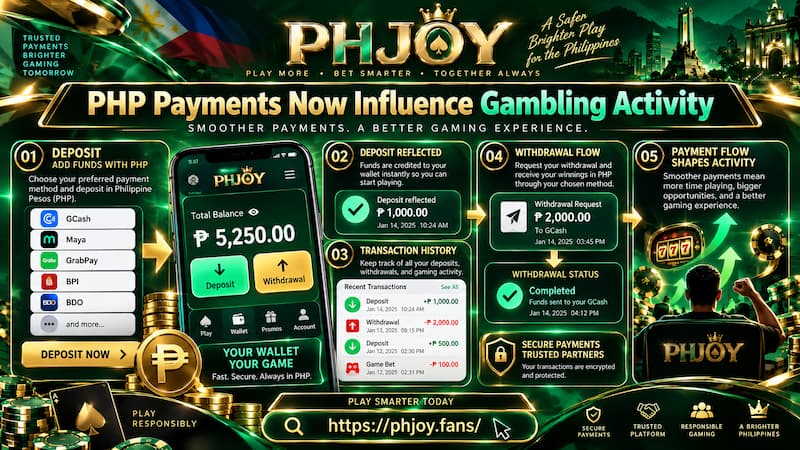
PHP Payments Now Influence Gambling Activity
Odds can be attractive and the interface can be smooth, but neither matters much when moving money becomes difficult.
PHP Payments Now Influence Gambling Activity
For Philippine users, the practical experience is often measured in PHP: How quickly is a deposit reflected? Is a withdrawal status easy to understand? Does the transaction history make sense the next morning?
Payment flow has become one of the clearest examples of Sports Betting Impact extending beyond wagering markets.
Payment Friction Can Move the Entire Market
In August 2025, the Bangko Sentral ng Pilipinas ordered supervised financial institutions to remove in-app links that directly redirected account holders to gambling websites. The instruction covered mobile payment apps and websites and was introduced while broader standards for online gambling payment services were being developed.
The effect was measurable. PAGCOR later said electronic gaming activity weakened during August and September after e-wallets were delinked from legitimate gaming platforms.
That episode reveals something important: A gambling market can change even when the games, odds and sports remain exactly the same.
Transaction Discipline Becomes Part of the Product
For users, a sensible routine is increasingly practical rather than complicated:
- Keep track of deposits in PHP instead of relying on memory.
- Check whether withdrawals have actually cleared before wagering again.
- Review transaction history after long sports weekends.
- Treat payment convenience as separate from the quality of the bet itself.
A smoother payment route may feel convenient, but convenience does not improve the underlying odds.
Regulation Is Reshaping the Sports Betting Market
Sports betting in the Philippines cannot be understood without separating domestic regulated gaming from offshore gaming.
Republic Act No. 12312, approved on October 23, 2025, banned Philippine Offshore Gaming Operations and related offshore gaming activities. The law specifically targets gaming operations conducted in the Philippines for offshore players.
That is different from saying all online sports betting inside the country was prohibited. PAGCOR continues to list sports betting among the gaming products regulated under its domestic electronic gaming structure.
Domestic Sports Betting and POGO Activity Are Different Markets
Confusing the two creates a distorted picture.
POGOs were structured around offshore customers. Domestic licensed sports betting operates under a separate regulatory framework for local gaming activity. The distinction affects licensing, payments, monitoring and which products may legally be offered.
For readers trying to judge a gambling product, that distinction is more useful than a vague “legal or illegal” label.
Regulation Extends Beyond the Betting Screen
Modern oversight reaches deeper into the operating chain. It can involve:
- Gaming operators
- Approved electronic games and sports markets
- Gaming system administrators
- Technology and service providers
- Payment channels
- Responsible gaming controls
This makes regulation part of product design rather than paperwork sitting behind the business.
Player Protection Is Becoming More Visible
Responsible gaming requirements are also moving closer to everyday use. PAGCOR launched a 24/7 National Problem Gambling Helpline in May 2026 and subsequently directed regulated gaming stakeholders to promote the service through responsible gaming materials.
The healthier direction for the market is not unlimited access. It is clearer access, better transaction visibility and stronger boundaries around how gambling is used.
For operators, those controls add compliance work. For users, they create a clearer dividing line between regulated gambling businesses and sites operating without comparable safeguards.
Market Growth Is No Longer a Straight Line
The digital gambling story becomes less convincing when every change is described as growth.
Electronic gaming surged during 2025, yet the second quarter of 2026 looked very different. PAGCOR reported total industry GGR of PHP 88.13 billion for Q2 2026, down 20.33% year over year. Electronic gaming contributed PHP 39.85 billion, or 45.21% of the quarter’s industry GGR, with PAGCOR citing weaker electronic gaming performance alongside inflation and geopolitical pressures affecting discretionary spending.
That correction matters.
Sports Betting Impact should therefore be measured through several forces at once: Mobile habits, sporting calendars, payment access, regulation, real-time technology and household spending. A large digital gaming number does not automatically prove that sportsbooks are expanding at the same rate.
Sports Betting’s Place in the Next Gambling Market
Sports betting is becoming less of a separate betting counter and more of a force shaping the design of digital gambling itself.
Its influence appears in short mobile sessions, real-time pricing, event-driven traffic, PHP payment flows and the expectation that one account should work smoothly across different types of gaming. Casino brands feel those changes even when sports are not their central product.
The next phase will not be defined by wagering volume alone. Sports Betting Impact will be clearer in how gambling businesses organize products, manage payments, respond to regulation and compete for attention during every minute of a live event.